> For the complete documentation index, see [llms.txt](https://docs.humata.ai/guides/llms.txt). Markdown versions of documentation pages are available by appending `.md` to page URLs; this page is available as [Markdown](https://docs.humata.ai/guides/readme/white-labeling.md).
# White Labeling
Humata supports white labeling of embedded chat views. This means that after uploading your files, you can embed Humata into your website and change Humata's logo to your company's brand and name.
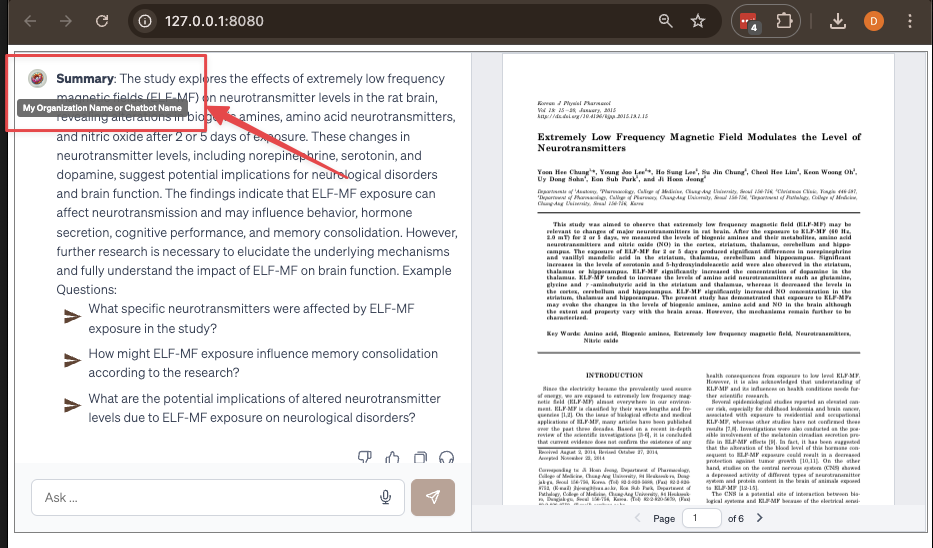
Here is an example of what white labeling will look like once set up and embedded on your website.
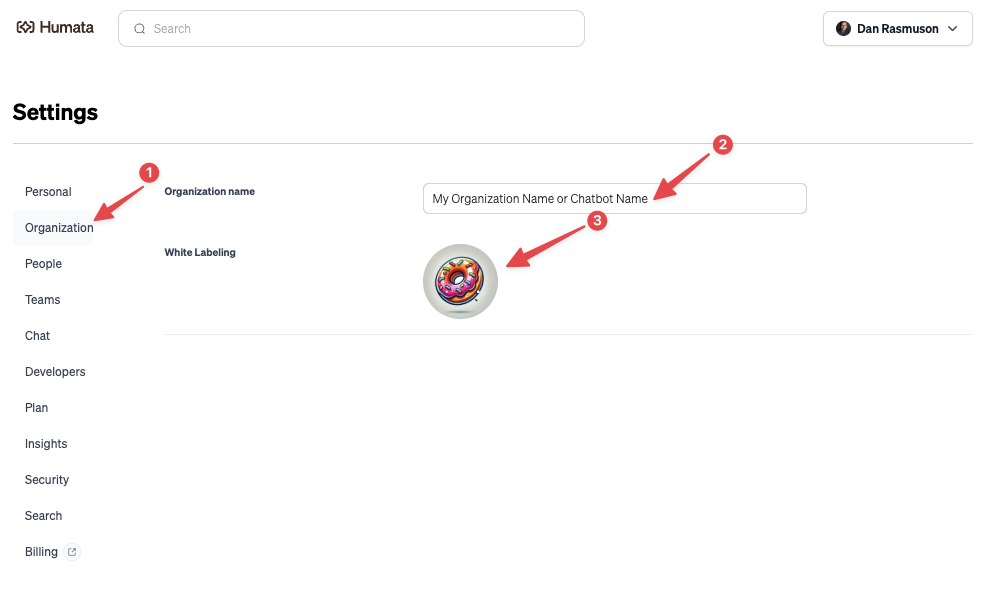
After your account has been upgraded to the Enterprise tier, go to Settings > Organization and type in "Organization Name" and upload a logo for the "White Labeling" option.
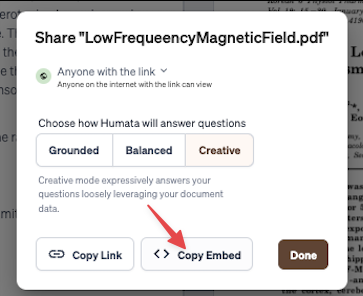
Next, select the Folder or File you want to embed on your website and press "Ask > Share," then click the "Embed" button. You can use this embed code inside your website.